
#PewResearchCenter’s latest findings shed light on the evolving attitudes towards marijuana legalization in the United States. As societal norms shift and discussions around cannabis use become more mainstream, it is crucial to examine the data and trends surrounding this controversial topic. Understanding the public’s stance on marijuana can provide valuable insights into potential policy changes and the future landscape of drug laws in the country. Let’s probe into the Pew Research Center’s research to uncover the current state of public support for marijuana legalization.
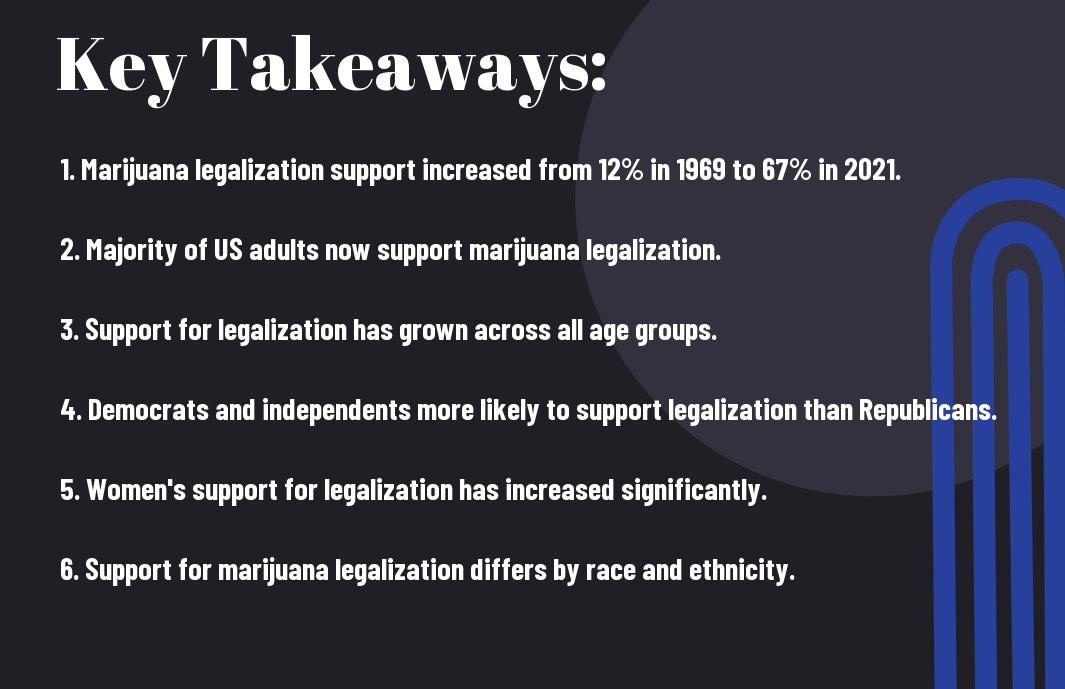
Key Takeaways:
- Majority Support: According to the Pew Research Center, a majority of Americans now support the legalization of marijuana.
- Generational Divide: Younger generations show higher levels of support for marijuana legalization compared to older generations.
- Partisan Differences: Support for marijuana legalization varies among political parties, with Democrats more likely to support it than Republicans.
- Regional Variances: Support for marijuana legalization differs among regions within the United States, with some states showing higher levels of support than others.
- Changing Attitudes: Attitudes towards marijuana legalization have shifted over time, with more states legalizing marijuana for recreational and medicinal use in recent years.
The Current Landscape of Marijuana Legalization
Overview of Legal Status by State
There’s a considerable variation in the legal status of marijuana across states in the United States. Any state can be categorized into three main groups: those where marijuana is fully legalized for both medical and recreational use, those where it is legal for medical use only, and those where it remains completely illegal.
Factors Influencing Changing Laws
Status: There are several factors contributing to the changing landscape of marijuana laws in the U.S. These include shifting public attitudes towards the drug, the potential economic benefits of legalization, and the recognition of its medical benefits. Recognizing these factors is crucial in understanding the momentum behind the push for reform.
Factors Influencing Changing Laws
Factors: The debate around marijuana legalization is increasingly influenced by scientific research that highlights its medicinal properties and relatively low potential for abuse compared to other substances. Recognizing the importance of evidence-based policymaking is vital in shaping future legislative decisions.

Public Opinion Trends on Marijuana Legalization
Unlike the past, where marijuana was considered mainly taboo, public support for its legalization has been on the rise in recent years. According to a Gallup poll, grassroots support for legalizing marijuana hit a record high in 2021, with 68% of Americans in favor of legalization.
Demographic Breakdown of Support
An analysis of the data reveals interesting demographic trends in support of marijuana legalization. While younger generations support legalization, older age groups are also increasingly favored. Additionally, there are variations in support based on factors such as education level, political affiliation, and geographic location.
Historical Perspective on Public Support
The perspective on public support for marijuana legalization has shifted significantly over time. In the early 2000s, support for legalization was below 35%, but by 2021, it had more than doubled. This change can be attributed to a combination of factors, including shifting cultural attitudes, increased access to information, and successful advocacy efforts by pro-legalization groups.
Implications of Legalization
Economic Impact
Allowing marijuana legalization can have a significant economic impact. Legalizing marijuana can create new opportunities for entrepreneurs, leading to job creation and an increase in tax revenue. The legal cannabis industry has the potential to boost local economies and generate revenue that can be used for public infrastructure, schools, and other necessary services.
Social and Health Considerations
An essential consideration in the debate over marijuana legalization is its impact on society and public health. While some argue that legalizing marijuana can lead to increased accessibility and potential misuse, supporters point to potential benefits such as reduced criminal activity related to drug trafficking and increased regulation to ensure product safety.
It is crucial to consider the potential social and health implications of legalizing marijuana. Research has shown that marijuana use can have both positive and negative health effects, depending on factors such as frequency of use, potency of the product, and individual health conditions. Public health officials and policymakers must carefully weigh these factors when considering the implications of marijuana legalization.
The Role of Advocacy and Opposition Groups
Major Advocacy Groups and Their Arguments
One of the leading advocacy groups pushing for marijuana legalization, according to the Pew Research Center,r is the National Organization for the Reform of Marijuana Laws (NORML). NORML argues that prohibition has failed, leading to a costly and ineffective war on drugs. They advocate for the regulation and taxation of marijuana, believing it will create jobs, generate revenue, and reduce crime associated with the illegal market.
Critical Opposition and Their Concerns
Groups opposed to marijuana legalization, such as Smart Approaches to Marijuana (SAM), express concerns about public health and safety. They fear that legalizing marijuana may lead to increased youth access, impaired driving incidents, and potential negative health effects. SAM argues for a public health approach focusing on education, prevention, and treatment rather than legalization.
Opposition groups often cite studies and data backing their claims, emphasizing the need for further research to understand the implications of widespread marijuana use on society.
To wrap up
With these considerations in mind, it is evident that marijuana legalization is indeed gaining public support,t according to the Pew Research Center. The data shows a clear trend toward acceptance of cannabis use for both medical and recreational purposes, with a growing majority of Americans expressing favorable attitudes. As more states move towards legalization and the conversation continues to evolve, policymakers must consider the shifting public opinion and the potential social, economic, and health implications of such changes. Continued research and public discourse will be crucial in shaping the future of marijuana legislation and regulation in the United States.
FAQ
Q: Is marijuana legalization gaining public support, according to the Pew Research Center?
A: Yes, according to the Pew Research Center, public support for marijuana legalization has been steadily increasing over the years. Aa majority of Americans now support the legalization of marijuana for both medical and recreational use.
Q: What factors have contributed to the increasing public support for marijuana legalization?
A: Several factors have contributed to the increasing public support for marijuana legalization. These include changing attitudes towards marijuana, as more people view it as less harmful than previously thought. Additionally, the success of states that have already legalized marijuana in generating tax revenue and reducing crime rates has also swayed public opinion in favor of legalization.
Q: What are the potential benefits of marijuana legalization, according to research?
A: Research suggests that marijuana legalization could have several potential benefits. These include generating tax revenue that can be used for public services, reducing the burden on the criminal justice system, and allowing for more effective regulation of the marijuana market. Additionally, legalization could lead to decreased stigma surrounding marijuana use and increased access to medical marijuana for those in need.