
Most individuals are aware of the ongoing debates regarding marijuana legalization, but what factors actually influence public opinion on this issue? Demographic variations play a crucial role in shaping how individuals perceive the legalization of marijuana. Factors such as age, gender, education level, and geographical location can all affect one’s stance on the controversial topic. By understanding these demographic variations, we can gain insights into the diverse perspectives surrounding marijuana legalization and its implications on society.
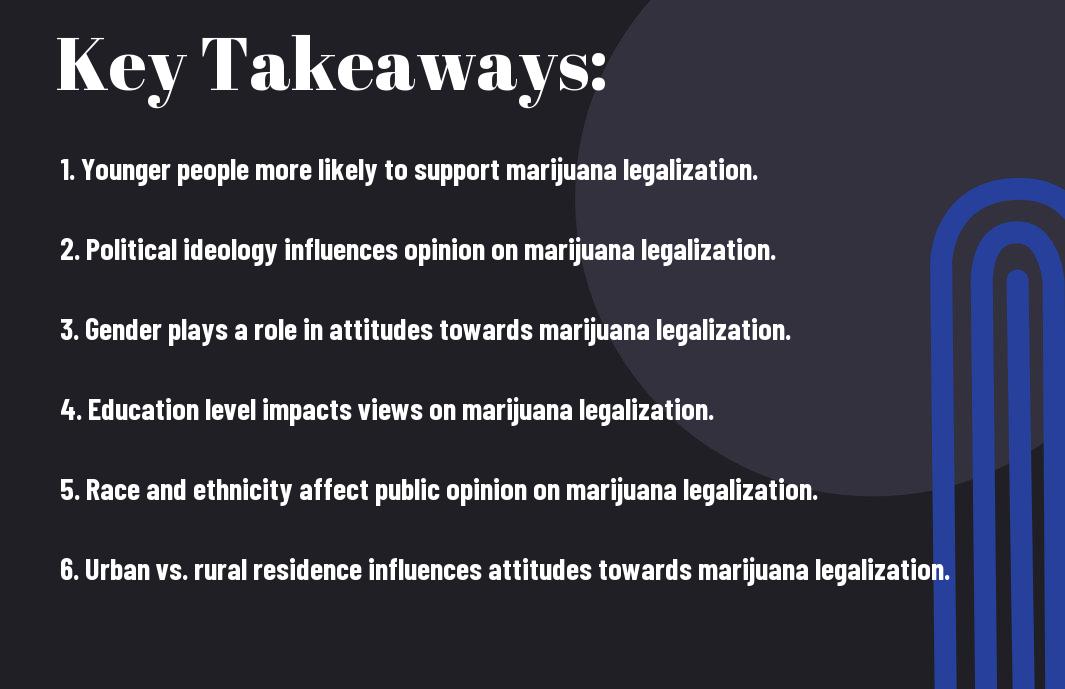
Key Takeaways:
- Age: Younger demographics are more likely to support marijuana legalization compared to older age groups.
- Education: Individuals with higher levels of education tend to be more supportive of marijuana legalization.
- Income level: Those with lower incomes are more likely to support marijuana legalization, possibly due to the perceived economic benefits.
- Political ideology: Liberals and Democrats are more likely to be in favor of marijuana legalization compared to conservatives and Republicans.
- Region: Support for marijuana legalization varies by region, with more urban areas leaning towards legalization compared to rural areas.
The Generational Divide
Views of Millennials vs. Older Generations
There’s a significant generational gap when it comes to views on marijuana legalization. Millennials tend to be more in favor of legalization compared to older generations. This divide can be attributed to factors such as changing social norms, increased access to information, and a shift towards more progressive attitudes among younger demographics.
The Role of Social Media and Information Access
An important factor influencing public opinion on marijuana legalization is the role of social media and information access. Platforms like Twitter, Instagram, and Facebook allow for the dissemination of information and the sharing of personal experiences related to marijuana use. This can shape perceptions and influence attitudes towards legalization.
Older generations, who may be less immersed in social media and online sources of information, may rely more on traditional media outlets and established authorities for their news and opinions on marijuana legalization. This difference in information sources can contribute to the generational gap in views on this issue.
Geographic Differences in Public Opinion
Regional Attitudes Towards Legalization
After political affiliation, geographic location plays a crucial role in shaping public opinion on marijuana legalization. Regional differences can be stark, with varying cultural, social, and economic factors influencing attitudes towards cannabis reform. Understanding these regional dynamics is crucial in designing effective legalization strategies and policies.
Urban vs. Rural Perspectives
Geographic disparities extend to the urban-rural divide, where distinct perspectives on marijuana legalization often emerge. Urban areas tend to be more progressive and open to cannabis reform, citing reasons such as social justice and economic benefits. On the other hand, rural communities may exhibit more conservative views due to traditional values, concerns about public safety, and perceptions of drug-related issues.
The presence of dispensaries and the visibility of marijuana use in urban settings can normalize the drug and contribute to more liberal attitudes towards legalization. In contrast, rural areas may associate marijuana with illegal activities and drug abuse, leading to greater opposition to legalization initiatives in these regions.
Political Affiliation and Ideology
Conservative vs. Liberal Views on Marijuana Legalization
Many demographic variations influence public opinion on marijuana legalization, including political affiliation and ideology. In the matter of conservative vs. liberal views on marijuana legalization, there is a clear divide. Conservatives tend to be more skeptical of legalizing marijuana due to concerns about potential negative societal impacts, while liberals often support legalization as a matter of personal freedom and criminal justice reform.
The Impact of Libertarian Beliefs
Many demographic variations influence public opinion on marijuana legalization, including political affiliation and ideology. The impact of libertarian beliefs is particularly noteworthy in the debate surrounding marijuana legalization. Libertarians typically advocate for minimal government intervention in personal choices, including the use of marijuana.
For instance, libertarians argue that individuals should have the right to make decisions about their own bodies and that the government should not dictate what substances they can or cannot use. This belief in individual autonomy and limited government influence shapes many libertarians’ support for marijuana legalization.
Socioeconomic Status and Education
All Marijuana Views Linked to Ideology, Religiosity, Age suggest that socioeconomic status and education play significant roles in shaping public opinions on marijuana legalization.
Income Levels and Support for Legalization
For many years, income levels have been linked to support for marijuana legalization. Research indicates that individuals with higher incomes tend to be more supportive of legalization compared to those with lower incomes. This trend may be attributed to access to information, resources, and opportunities that come with higher income levels.
Correlation Between Education and Pro-Legalization Stance
Support for marijuana legalization is also correlated with education levels. Studies show that individuals with higher levels of education, such as college graduates, are more likely to support legalization compared to those with lower levels of education. Education can influence one’s understanding of the complex issues surrounding marijuana, leading to a more informed and favorable stance towards legalization. Correlation between education and pro-legalization stance further showcases how knowledge and critical thinking skills acquired through education can impact public opinion on this contentious topic.
Racial and Ethnic Influences
Historical Context of Marijuana and Minority Groups
Influences on public opinion regarding marijuana legalization among different racial and ethnic groups can be traced back to historical factors. Throughout history, minority communities in the United States have been disproportionately impacted by the criminalization of marijuana. This has led to a complex relationship between these communities and the perception of marijuana use and legalization.
Current Trends Among Different Racial and Ethnic Communities
Influences on public opinion regarding marijuana legalization vary among different racial and ethnic communities. For example, African American and Hispanic communities may view marijuana legalization differently due to historical disparities in law enforcement practices related to drug offenses. Meanwhile, attitudes within Caucasian and Asian communities may be influenced by differing cultural norms and values.
Different racial and ethnic communities have unique perspectives on marijuana legalization based on a variety of factors, including historical experiences, cultural beliefs, and socio-economic status. Understanding these diverse perspectives is imperative in shaping effective policies and initiatives that address the needs and concerns of all communities.
Gender and Views on Marijuana Legalization
Your Two-thirds of Americans support marijuana legalization, but how does gender influence public opinion on this matter?
Comparing Male and Female Perspectives
Female perspectives on marijuana legalization can differ from those of males. According to a study, women may tend to prioritize safety concerns and health impacts when considering the legalization of marijuana. On the other hand, men might focus more on the economic benefits and personal freedom associated with legalization.
Influence of Gender on Policy and Usage Rates
The influence of gender on policy and usage rates is a complex issue. While males traditionally have had higher reported usage rates than females, this trend is changing. Studies show that societal attitudes towards marijuana use for both medicinal and recreational purposes are evolving, and gender gaps in usage rates are narrowing. Additionally, gender can play a role in shaping policy decisions related to marijuana legalization, as policymakers may take into account diverse perspectives from both men and women when crafting legislation.
Views on marijuana legalization are nuanced and influenced by a variety of factors, including gender. By understanding the different perspectives and considerations that men and women bring to the table, we can have a more informed and comprehensive discussion on this important issue.
Conclusion
Now, it is clear that various demographic factors play a significant role in shaping public opinion on marijuana legalization. Age, gender, education level, political affiliation, and region all influence how individuals perceive the issue. Understanding these variations is crucial for policymakers and advocates seeking to build support for marijuana reform initiatives. By acknowledging and addressing the diverse perspectives within different demographics, more effective strategies can be developed to promote informed discussions and ultimately drive positive change in marijuana legalization policies.
FAQ
Q: What demographic variations influence public opinion on marijuana legalization?
A: Public opinion on marijuana legalization is influenced by various demographic factors such as age, education level, political affiliation, and geographic location. Younger individuals and those with higher levels of education are more likely to support marijuana legalization, while older individuals and those with conservative political views may be less supportive. Additionally, support for marijuana legalization tends to be higher in urban areas compared to rural areas.
Q: How does gender play a role in shaping public opinion on marijuana legalization?
A: Gender also plays a role in shaping public opinion on marijuana legalization. Research suggests that men are generally more supportive of marijuana legalization compared to women. This gender difference in opinion may be attributed to various factors such as socialization, attitudes towards risk-taking behavior, and perceptions of drug use.
Q: Does race or ethnicity affect public attitudes towards marijuana legalization?
A: Race or ethnicity can impact public attitudes towards marijuana legalization. Studies have shown that African Americans and Hispanics tend to be more supportive of marijuana legalization compared to Caucasians. This difference in opinion may be influenced by various socio-cultural factors, historical injustices related to drug enforcement policies, and differing perspectives on the criminal justice system.