
Most people confuse THC, CBD, and CBN, but you need clear facts to pick what’s right for your needs: THC is psychoactive and can impair your judgment and cause intoxication, CBD is non‑intoxicating and shows promise for anxiety, pain, and inflammation, while CBN may be mildly sedative and is often used to support sleep; consider potency, side effects, interactions, and legal status when choosing for your health.
Key Takeaways:
- THC is psychoactive (binds CB1) and best for strong pain relief, nausea, and appetite stimulation; it causes intoxication, impaired cognition, and possible anxiety.
- CBD is non-intoxicating, modulates multiple pathways, and is commonly used for anxiety, inflammation, and seizure control; it’s generally well tolerated but can interact with medications.
- CBN is a degradation product of THC with mild sedative properties and limited evidence for sleep and relaxation; choose based on desired effects-avoid THC if you need no intoxication or drug-test safety, use CBD for daytime non-intoxicating relief, and consider CBN (or CBD+CBN) for sleep support.
Overview of Cannabinoids
Over 140 phytocannabinoids exist in cannabis, but you mainly care about THC, CBD and CBN; they act on your endocannabinoid system (ECS) via CB1/CB2 receptors and other targets. While THC is psychoactive and CBD is largely non-intoxicating, each has distinct pharmacology, therapeutic uses, and safety profiles-so you must weigh potency (flower often contains 10-30% THC) against intended effects and legal limits like the 0.3% hemp threshold in the US.
Understanding THC
THC binds CB1 receptors in your brain, producing euphoria, altered perception and impairment of short-term memory and coordination; flower potency commonly ranges 10-30% THC. Clinically, you can use THC for nausea, appetite stimulation, and pain, but high doses raise the risk of anxiety, acute psychotic symptoms, and faster heart rate, especially in adolescents or those with a family history of psychosis.
Understanding CBD
CBD does not produce a high and works indirectly on the ECS, serotonin (5‑HT1A) and other pathways; you’ll find OTC doses typically 10-50 mg/day, while prescription Epidiolex treats Dravet and Lennox‑Gastaut syndromes. Users report anxiolytic and anti-inflammatory effects, but benefits vary by dose and formulation, and CBD can alter other drugs’ levels via CYP450 interactions.
Mechanistically, you should know CBD is a low‑affinity CB1/CB2 modulator and may raise anandamide by inhibiting FAAH; in RCTs of severe epilepsy, Epidiolex (10-20 mg/kg/day) reduced seizure frequency by roughly 36-44% versus placebo. Monitor liver enzymes when combining high CBD doses and consult about interactions with anticoagulants, antiepileptics, or psychotropics because CBD inhibits CYP3A4 and CYP2C19.
CBN Explained
Origins and Effects
Formed when THC degrades through heat, light and oxygen, CBN shows up more in aged or poorly stored flower; fresh cannabis often contains <1% CBN while degraded samples can reach 1-5%. You’ll find it is mildly psychoactive and generally far weaker than THC because it has low affinity for CB1/CB2 receptors, and users most commonly report subtle relaxation and sedation, particularly in multi-cannabinoid formulations.
Benefits of CBN
You’ll see CBN marketed primarily for sleep and mild pain relief. Preclinical research indicates analgesic and antibacterial activity, and consumer reports commonly note faster sleep onset; many over-the-counter products deliver between 2-25 mg per serving. Clinical evidence remains limited, but available data and user surveys consistently point to improved relaxation and nighttime rest as the main benefits.
Practically, you can combine CBN with CBD or small amounts of THC to enhance sedative effects-early studies showed CBN potentiated THC’s sleep-promoting action. Typical dosing for sleep falls around 5-20 mg, though effects depend on tolerance and body weight. Be cautious: CBN can increase CNS depression when taken with alcohol, benzodiazepines or opioids, so avoid mixing until you know how your body reacts.
Key Differences Between THC, CBD, and CBN
THC is a psychoactive CB1 agonist that produces intoxication and binds densely in the brain, while CBD has low CB1/CB2 affinity and primarily modulates endocannabinoid signaling and inflammation. CBN forms when THC oxidizes with age and is milder and more sedative than THC. Legally, hemp contains ≤0.3% Δ9‑THC by dry weight in the U.S., making CBD products legally distinct from marijuana; receptor pharmacology, onset, and clinical evidence differ significantly across the three.
Psychoactive Properties
THC reliably produces euphoria, altered perception, and impairments in memory and reaction time via CB1 activation; you can notice effects at ~5-10 mg oral THC if you’re inexperienced. CBD does not intoxicate and can attenuate THC‑induced anxiety in some studies. CBN is only mildly intoxicating but appears to enhance sedation, especially when combined with THC, so your driving and machinery operation remain at risk when THC is present.
Medical Benefits
Epidiolex (CBD) is FDA‑approved for Lennox‑Gastaut and Dravet syndromes and is dosed at 10-20 mg/kg/day in trials; THC formulations like dronabinol and nabilone treat chemotherapy nausea and AIDS‑related anorexia. CBN shows preliminary promise for sleep and analgesia but lacks robust human RCTs. Evidence strength varies: strong for specific CBD epilepsy indications, moderate for THC in nausea/appetite and some pain, and limited for CBN.
Clinical practice reflects those differences: Epidiolex trials used weight‑based CBD dosing with measurable seizure reductions in refractory pediatric cohorts, whereas dronabinol is commonly prescribed at 2.5-10 mg oral for nausea/appetite stimulation with documented symptomatic benefit. You should note that THC’s side effects-cognitive impairment, anxiety, tachycardia-are dose‑dependent, and CBN recommendations remain experimental pending larger human studies.
Ideal Use Cases for Each Cannabinoid
When to Use THC
You should reach for THC when you need strong, short-term symptom relief-think acute pain flares, chemotherapy nausea, or appetite stimulation. Inhaled THC acts within 5-15 minutes and edibles take 30-120 minutes; start low (2.5-5 mg) and titrate. Clinical use includes dronabinol (2.5-10 mg) for nausea. Be aware that THC causes impairment and at higher doses (≈10-20 mg+) can trigger anxiety or psychotic symptoms in susceptible people, so avoid driving and operate caution with other CNS depressants.
When to Use CBD
You should consider CBD for chronic anxiety, inflammation, or as an adjunct for pain when you don’t want intoxication. Human data include a 300 mg oral dose reducing public-speaking anxiety and Epidiolex (pure CBD) approved for epilepsy at 10-20 mg/kg/day. Typical consumer doses range 20-50 mg daily, though products vary widely. Watch for CYP450-mediated drug interactions that can alter blood levels of warfarin, antiepileptics, and other medications.
For more detail: you should use full-spectrum or broad-spectrum CBD if you want potential entourage benefits, but expect variable cannabinoid content-lab-tested products are vital. If you’re on prescription meds, get a baseline liver panel and consult a clinician because CBD can raise liver enzymes and change plasma concentrations of co-medications. Topicals work locally for joint pain; oral forms suit systemic anxiety or sleep support.
When to Use CBN
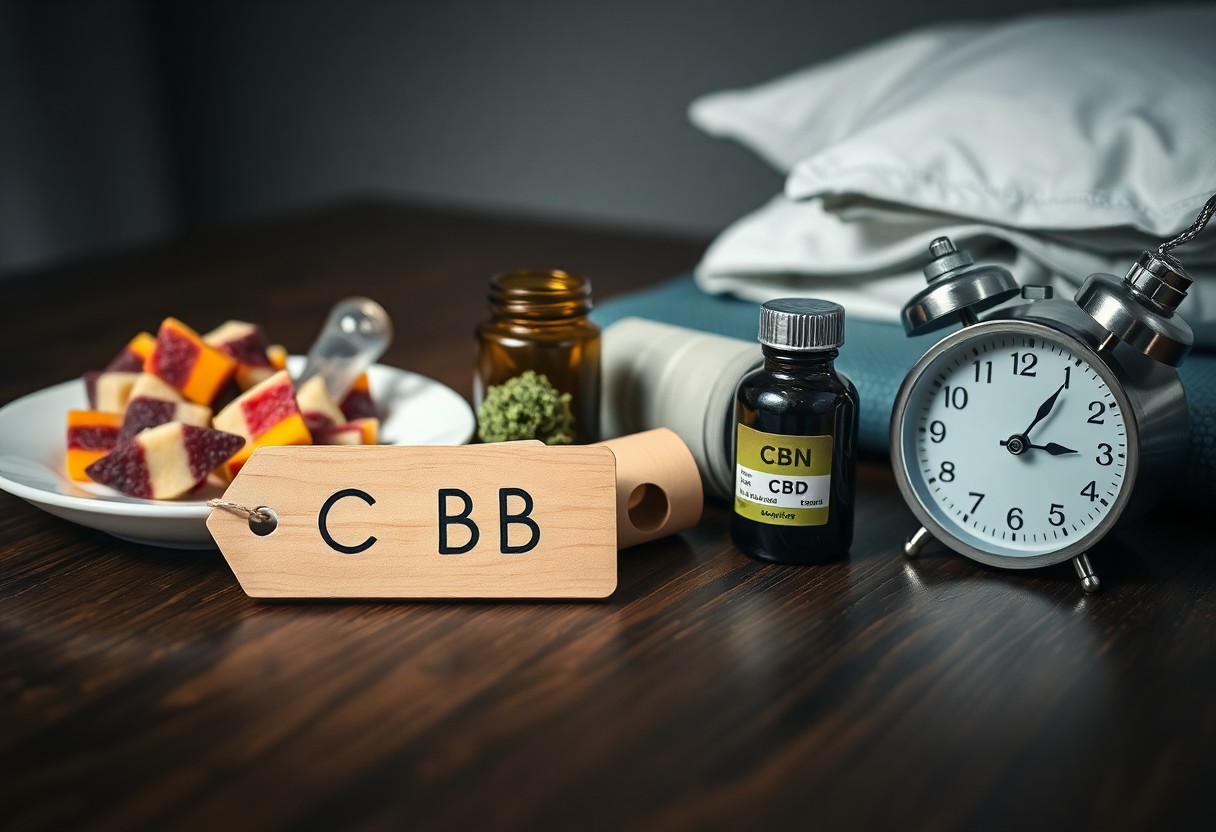
You should try CBN primarily for sleep support and mild sedation, especially when aged-cannabis or oxidized products are available. CBN appears in higher amounts as THC degrades and is commonly dosed in commercial sleep blends at about 5-20 mg. Early animal and small human studies suggest sedative effects, but evidence remains limited. Use caution with other sedatives and avoid driving until you know your response; CBN can increase drowsiness.
Additional info: CBN is a weak CB1/CB2 agonist and often works best combined with low-dose THC or CBD-the so-called entourage effect increases sedative potential. If you’re combining CBN with prescription sleep meds, alcohol, or opioids, expect additive sedation and discuss dosing with a provider. Clinical trials are sparse, so track sleep metrics (sleep latency, awakenings) over 2-4 weeks to judge effectiveness.
Legal Status and Regulations
Federal law treats psychoactive THC as a Schedule I substance while the 2018 Farm Bill legalized hemp with no more than 0.3% delta‑9 THC, creating the split you navigate when buying or transporting products. States differ sharply: some allow adult-use markets and dispensaries, others limit access to medical programs or retain felony penalties for high-THC possession. Interstate shipping and airport travel can trigger federal enforcement, so always check local statutes before you move products.
THC Legislation
For THC specifically, the federal/state disconnect matters: hemp-derived cannabinoids under the 0.3% threshold are federally lawful, yet psychoactive cannabis remains broadly prohibited at the federal level. States like Colorado (legalized 2012) and California (2016) permit adult-use sales at age 21, while many jurisdictions restrict access to medical patients. You must also account for strict DUI rules and per-se THC limits-violating them can lead to severe criminal penalties.
CBD and CBN Legalities
Hemp-derived CBD is widely available post-2018 Farm Bill, but the FDA has approved only the prescription Epidiolex, leaving most OTC CBD in a regulatory gray area that you should treat cautiously. CBN generally follows hemp rules but is less studied and sometimes appears in state statutes as an analog, creating inconsistent legality. Watch for companies making unproven health claims and for products without third-party lab verification.
You should always request Certificates of Analysis (COAs) proving potency and absence of contaminants-heavy metals, pesticides, solvents, and microbial impurities cause real safety risks. Also be wary of synthetically converted cannabinoids (for example, delta‑8 derived from CBD); several states have banned those compounds and the FDA has issued consumer warnings, so selling or traveling with such products can expose you to fines or seizure.
Consumption Methods
You’ll choose a method based on onset, duration and convenience: inhalation (smoking/vaping) gives effects in 2-10 minutes and lasts 2-4 hours; edibles take 30-90 minutes to kick in, peak at 2-4 hours and can last 6-12+ hours; sublingual tinctures act in 15-45 minutes; topicals stay local. For product comparisons and deeper chemistry, see CBD vs CBG vs CBN vs THC: Benefits and Key Differences.
Popular Methods for Each Cannabinoid
For THC you’ll commonly see smoking, vaping, tinctures and edibles; for CBD oils, capsules, vapes and topicals dominate; for CBN most products are tinctures, capsules or gummies marketed for sleep and often combined with melatonin or low-dose THC. You should note that topical CBD primarily provides localized relief and rarely produces systemic effects, while inhaled products deliver the fastest systemic absorption.
Dosage Considerations
You should start low and titrate: many users begin THC microdoses at 2.5-5 mg, consider CBD starting around 10-50 mg, and find CBN anecdotal ranges of 5-20 mg. Body weight, metabolism, tolerance, product potency and method all change effective dose, and combining cannabinoids can produce additive effects – which can increase sedation or impairment.
When increasing dose, you should change one variable at a time: wait the full onset window (e.g., 2 hours for edibles) before adjusting, then raise by ~25-50% increments while tracking effects. Be extra cautious if you take prescription meds (notably blood thinners), have liver disease, are older, or plan to drive – mixing cannabinoids with alcohol or sedatives can significantly increase risk.
Summing up
So when choosing between THC, CBD, and CBN, weigh effects and goals: THC offers psychoactive relief and strong symptom control, CBD provides non-intoxicating anxiety and inflammation support, and CBN shows promise for sleep and mild sedation. Consider legal status, side effects, and dosing, and consult a professional to tailor a regimen that fits your needs and tolerance.
FAQ
Q: What are the main chemical and pharmacological differences between THC, CBD, and CBN?
A: THC (tetrahydrocannabinol) is the primary psychoactive cannabinoid; it binds directly to CB1 receptors in the brain and CB2 receptors in peripheral tissues, producing intoxication, analgesia, appetite stimulation, and altered perception. CBD (cannabidiol) is non-intoxicating at typical doses and has low direct affinity for CB1/CB2; it modulates the endocannabinoid system indirectly, affects serotonin and TRPV1 receptors, and has anti-inflammatory, anxiolytic, anticonvulsant, and neuroprotective actions. CBN (cannabinol) is a degradation product of THC found in aged cannabis; it is mildly psychoactive (much weaker than THC), interacts weakly with cannabinoid receptors, and is being studied for sedative, antibacterial, and appetite-related effects. Onset and duration vary by delivery method (inhalation ≈ minutes, oral/edibles ≈ 30-120 minutes, topicals local), and individual metabolism alters intensity and half-life.
Q: How do their effects, side effects, and therapeutic uses compare?
A: THC is effective for pain, nausea/vomiting (chemotherapy), appetite loss, and spasticity but can cause impaired cognition, anxiety or paranoia at higher doses, increased heart rate, and risk of dependence with frequent use. CBD has evidence for specific seizure disorders (e.g., Epidiolex), shows benefit for anxiety, some chronic pain and inflammation, and tends to be well tolerated; common side effects include drowsiness, GI upset, and interactions with drugs metabolized by CYP450 enzymes. CBN is under-researched but shows potential as a sleep aid and for mild analgesia; reported side effects are generally mild but data are limited. Combining cannabinoids often changes the net effect (entourage effect): low-dose THC + CBD can provide symptom relief with fewer cognitive effects than THC alone.
Q: Which cannabinoid should I choose for different goals and what practical considerations matter?
A: For daytime anxiety, inflammation, or seizure control: prioritize CBD products (broad-spectrum or isolate) and start with low doses, increasing slowly while monitoring drug interactions. For chronic pain, nausea, appetite loss, or muscle spasticity: consider products containing THC; a balanced THC:CBD ratio often improves tolerability. For insomnia or people seeking mild sedation at night: try CBN-containing products or a low-dose THC/CBD combination; evidence is preliminary, so test effects at home first. For recreational use and strong symptom relief: THC is the primary choice but carries intoxication and impairment risks. Always check legal status (hemp-derived CBD may contain trace THC and can still cause positive drug tests), avoid cannabinoids during pregnancy/breastfeeding, consult a clinician if taking prescription medications, and prefer reputable products with third-party lab testing. Start low, go slow, and avoid driving or operating machinery if impaired.