
With different delivery methods producing varied onset, duration, and exposure risks, you need to compare smoking, vaping, and edibles to decide what’s healthier for your lungs and overall safety. Smoking generates tar and carcinogens and is the riskiest for lung health; vaping eliminates combustion and may reduce smoke-related toxins but can expose you to toxic chemicals and e-cigarette-associated lung injury; edibles avoid inhalation harm and provide longer-lasting, smoke-free effects but carry delayed onset and overdose risk. Consider your priorities-lung health, dosing control, and safety-when choosing.
Key Takeaways:
- Smoking produces combustion-related toxins and particulate matter, posing the highest respiratory and cardiovascular risks; onset is rapid, which aids titration but increases immediate harm.
- Vaping reduces exposure to combustion byproducts and may lower respiratory risk versus smoking, but device/liquid quality and long-term safety remain uncertain; onset is fast for easier dose control.
- Edibles eliminate inhalation harms but have delayed, variable onset and longer duration, increasing risk of accidental overconsumption and prolonged impairment; for lung health, edibles or reputable vaporizers are generally preferable to smoking.
Overview of Cannabis Consumption Methods
You’ll see three dominant approaches-smoking, vaping, and edibles-each differing in onset, bioavailability, and risk. Inhalation (smoking/vaping) delivers effects in ~1-10 minutes with roughly 10-35% bioavailability, while edibles take 30-120 minutes, convert THC to more potent 11‑hydroxy‑THC, and often yield longer, unpredictable effects. You should weigh immediate dose control and respiratory harms against delayed dosing issues and potency variability when choosing.
Smoking
You inhale combusted plant material, producing smoke that contains particulates, tar and gases such as carbon monoxide. Studies associate regular cannabis smoking with increased chronic bronchitis symptoms and airway inflammation; combustion also creates thousands of chemical byproducts absent in non-combustion methods. If you smoke, method (joint, pipe, bong) and frequency strongly influence respiratory risk and dose exposure.
Vaping
You heat flower or concentrates to aerosolize cannabinoids-typically in the 160-220°C range-reducing many combustion byproducts while providing rapid onset like smoking. That said, device quality and cartridge chemistry matter: contaminated cartridges and vitamin E acetate were implicated in the 2019 EVALI outbreak (CDC reported >2,800 hospitalizations, 68 deaths), so you must prioritize lab‑tested products and safe devices.
You should choose between portable pen devices, desktop vaporizers, or dab rigs based on material: flower vapes with convection/conduction chambers versus concentrate devices with higher temps. Onset is 1-5 minutes with peaks by 15-30 minutes; maintaining temperature control (avoiding excessive heat) limits thermal degradation and airway irritation, and using certified, solvent‑free cartridges reduces contamination risk.
Edibles
You eat or drink infused products that pass through the digestive system, producing effects in 30-120 minutes and lasting 6-12+ hours. Oral THC has lower, variable bioavailability (often <20%) but converts to 11‑hydroxy‑THC, which can be more potent and longer‑acting-this makes dose titration harder and increases the chance you'll consume too much if you act on delayed onset.
You should start very low-especially with high‑potency gummies or tinctures-and account for food, metabolism, and product variability; fat‑containing meals increase absorption. Typical guidance is to begin at 2.5-5 mg THC and wait at least 2 hours before redosing, since effects can peak late and persist, and poorly labeled products pose poisoning risks for children.
Health Impacts of Smoking Cannabis
Smoking delivers cannabinoids quickly but also exposes you to combustion byproducts – tar, carbon monoxide, and polycyclic aromatic hydrocarbons – that irritate airways and deposit particulates deep in the lung. You typically inhale more deeply and hold smoke longer than with cigarettes, which increases particulate deposition; acute effects include cough, phlegm, and transient bronchospasm within minutes of use.
Respiratory Effects
Frequent smoking is linked to higher rates of cough, sputum production, and wheeze; epidemiological studies show regular (weekly to daily) users report up to 2-3 times the prevalence of chronic bronchitis symptoms compared with nonusers. You also face impaired mucociliary clearance and greater susceptibility to respiratory infections from repeated airway irritation and inflammation.
Long-term Health Risks
Long-term data are mixed: many case-control studies find no clear increase in lung cancer after adjusting for tobacco, yet heavy, long-term cannabis smoking – especially when combined with tobacco – may elevate risk of chronic airflow obstruction. You should note that co-use and variable exposure make it hard to isolate pure cannabis effects.
More detailed analyses reveal that cannabis smoke contains the same carcinogenic compounds as tobacco, such as PAHs and nitrosamines, and that increasing THC potency (from ~3% decades ago to commonly >15-20% now) changes smoking patterns and cumulative exposure. You must factor in dose, frequency, inhalation depth, and tobacco co-use when assessing your long-term respiratory and cancer risk.
Health Impacts of Vaping Cannabis
Vaping often reduces combustion byproducts compared with smoking, but you should weigh that against other harms: Vaping vs. Smoking Weed: Is One Safer? Concentrates used in cartridges can reach 80-90% THC, increasing acute impairment and dependence risk, and the 2019 EVALI outbreak resulted in 2,807 hospitalizations and 68 deaths, linking vitamin E acetate to severe lung injury in some illicit THC products.
Comparison to Smoking
Compared with smoking, vaping typically cuts levels of PAHs and carbon monoxide, yet you may inhale metal particles, volatile aldehydes, and flavoring chemicals absent in clean flower; vaping also often delivers much higher THC per puff, so your acute intoxication and tolerance can rise faster than with smoked cannabis.
Vaping vs Smoking: Key Differences
| Vaping | Smoking |
|---|---|
| Fewer combustion carcinogens; risk of metals and flavoring toxins | Contains tar, PAHs, and carbon monoxide |
| Concentrates often 80-90% THC; faster tolerance | Flower typically 10-25% THC; slower escalation |
| Lower visible respiratory irritation initially; documented acute lung injury in some cases | Linked to chronic bronchitis, persistent cough, and reduced lung function over years |
Potential Risks
You should know vaping carries specific hazards: the 2019 EVALI cases tied to vitamin E acetate, flavoring agents like diacetyl associated with bronchiolitis obliterans, and inhaled metals (lead, nickel) from devices; long-term cancer risk is uncertain and depends on product composition and device temperature.
Further, analyses of illicit cartridges have repeatedly found additives (vitamin E acetate) and cutting agents that persist in aerosol and deposit in small airways, while independent lab tests show metal nanoparticles and carbonyls form when solvents are heated; short-term clinical studies report increased airway resistance and inflammatory markers after vaping sessions, and when you use high-THC concentrates regularly, your risk of anxiety, acute psychosis, and dependence rises substantially.

Health Impacts of Edibles
Edibles shift most of the health discussion to your liver and digestive system: oral THC undergoes first-pass metabolism producing 11-hydroxy-THC, which is often more potent and longer-lasting than smoked THC. Typical onset is 30-90 minutes, peak at 2-4 hours, and effects can last 6-12+ hours, so you face a higher risk of accidental overconsumption if you dose too quickly; on the positive side, edibles avoid combustion-related lung damage seen with smoking.
Digestion and Absorption
When you eat an edible, absorption is slow and highly variable: oral THC bioavailability is roughly 4-12%, influenced by stomach contents, formulation, and gut enzyme activity. High-fat matrices (butter, oil, chocolate) can double absorption and accelerate onset, while individual factors like BMI, liver function, and concurrent medications alter both intensity and duration.
Onset Time and Duration of Effects
Expect a delayed onset of 30-90 minutes and a peak around 2-4 hours; novice users are often advised to start at 2.5-5 mg THC because common 10 mg servings can produce strong, prolonged effects. If you take another dose before the first peaks, you risk stacking and a much stronger high that may last well beyond 12 hours.
Formulation matters: oil-based tinctures or fatty confections produce faster, stronger 11-hydroxy-THC effects than low-fat gummies, and alcohol or enzyme inhibitors (CYP3A4/2C9 modifiers) can amplify absorption. Be aware that pets and children are especially vulnerable to edible exposures, often requiring veterinary care for severe toxicity.
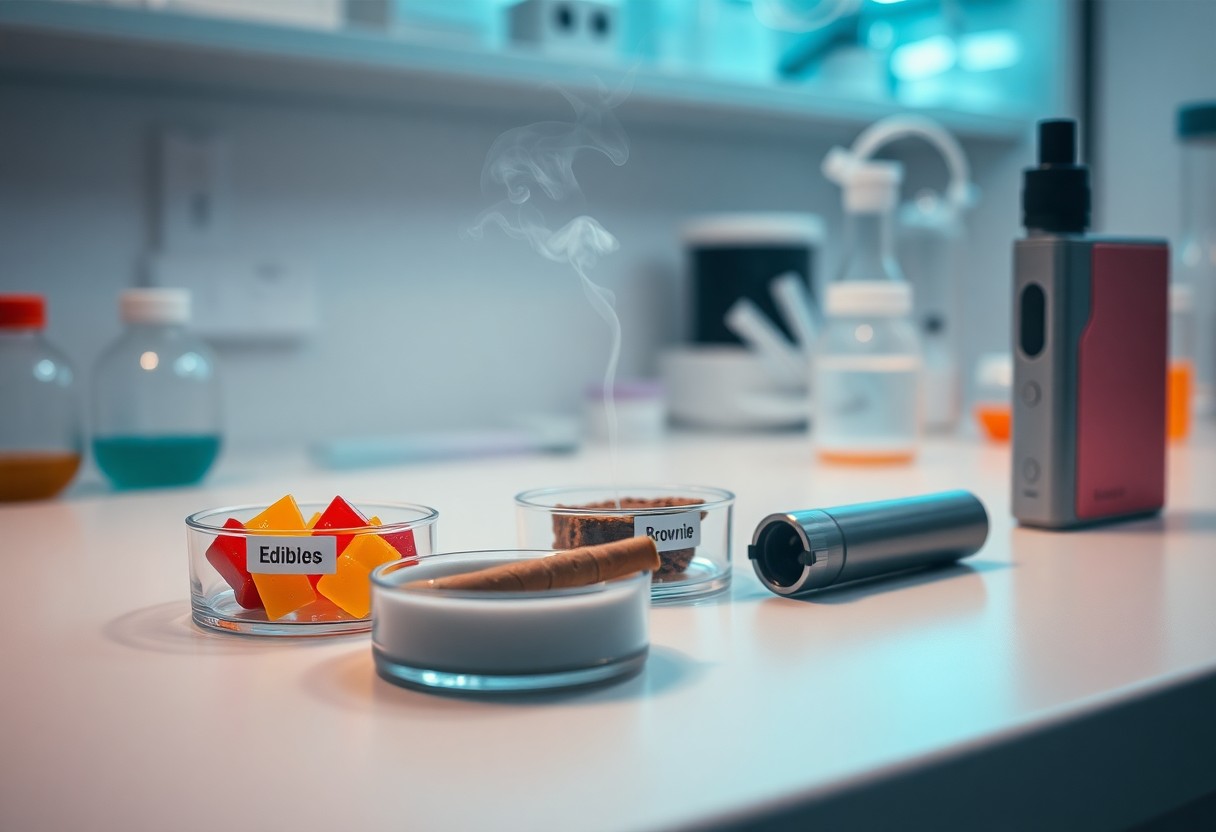
Comparing the Effects: Which Method is Healthiest?
| Method | Health Notes |
|---|---|
| Edibles | Onset typically 30-120 minutes, effects lasting 4-12+ hours; dosing can vary widely-commercial products often standardize at 10 mg THC per serving, while homemade items risk large variability; secondhand exposure is minimal. |
| Smoking | Rapid onset (seconds) with peak effects ~10 minutes; combustion produces tar, carbon monoxide and particulates linked to increased bronchitic symptoms; cancer risk from cannabis smoke remains less certain than tobacco but respiratory irritation is common. |
| Vaping | Inhalation onset like smoking but without combustion; may reduce some toxicants, yet emits ultrafine particles and metals; 2019 EVALI outbreak tied to contaminated THC vape oils caused >2,800 hospitalizations and ~68 deaths, showing potentially severe risks. |
Immediate vs. Long-term Effects
You get inhaled THC within seconds, so smoking or vaping is ideal for acute symptom relief; by contrast, edibles take 30-120 minutes to start and can last 4-12+ hours, making them better for sustained relief. Short-term harms from smoking include cough and bronchitis-like symptoms, while long-term vaping data remains limited; some studies show symptom improvement when smokers switch to vapes, but unknown chronic risks persist.
User Preferences and Lifestyle
Many people choose based on routine: you might prefer edibles for discreet, long-lasting sleep aid or 10 mg daytime dosing, choose smoking for immediate control of nausea or acute pain, and pick vaping for lower odor and portability. Be aware that edibles carry a high overdose risk from delayed onset, so you should dose slowly-start low and wait at least two hours before repeating.
Regulations and personal context shape choices: in several U.S. states the legal cap is 10 mg THC per serving and 100 mg per package, which helps standardize dosing and reduce accidental overconsumption that raised emergency visits after legalization. If you need predictable, short relief for breakthrough pain, inhalation gives titratable dosing; when you want steady overnight relief, edibles at 5-20 mg (adjusted to tolerance) are often more practical, but always factor in potency labels and onset times when planning use.
Summing up
So you should weigh trade-offs: edibles spare your lungs but carry delayed onset and dosing uncertainty that can lead you to overconsume; smoking delivers rapid effects but exposes your respiratory system to combustion toxins and greater long-term harm; vaping reduces combustion-related toxins yet still poses unknown long-term risks and device-related contaminants-choosing the least harmful option depends on your tolerance for delayed effects, dosing control, and lung-health priorities.
FAQ
Q: Which method-edibles, smoking, or vaping-is least harmful to the lungs?
A: Smoking is the most harmful to the lungs because combustion creates tar, particulate matter, carbon monoxide, and numerous carcinogens linked to chronic bronchitis, reduced lung function, and elevated cancer risk. Vaping eliminates combustion and generally produces fewer of those combustion-related toxins, but it still exposes the lungs to ultrafine particles, solvents, flavoring chemicals, and sometimes contaminants or heavy metals; unregulated products have been associated with acute lung injury (e.g., EVALI). Edibles bypass the respiratory system entirely, so they pose no inhalation-related lung risks, making them the safer option for people with respiratory disease or who want to avoid lung exposure.
Q: Which method carries the highest risk of acute overconsumption or unpredictable effects?
A: Edibles carry the highest risk of acute overconsumption and unpredictable effects because their onset is delayed (commonly 30-120 minutes), peak effects are later and can be more intense due to liver conversion of THC to 11‑hydroxy‑THC, and effects last much longer (often many hours). This delay leads people to take extra doses before the first dose has taken effect. Smoking and vaping produce rapid onset within minutes, making dose titration easier and overdose effects typically shorter-lived; however, very high inhaled doses can still cause severe anxiety, vomiting, or acute impairment. Children and pets are especially vulnerable to serious effects from accidental edible ingestion.
Q: For long-term health or harm-reduction goals, which option is preferable and what precautions should be followed?
A: For long-term health and harm reduction, edibles or other noninhaled forms are preferable to smoking because they avoid chronic inhalation harms. Vaping can be a harm-reduction step compared with smoking if using regulated products with known ingredients, avoiding vitamin E acetate and illicit cartridges, and selecting devices that minimize overheating; however, long-term safety of many vaping constituents remains uncertain. Smoking is the least healthy option due to combustion byproducts and secondhand smoke. Precautions: choose lab-tested products, follow clear dosing guidelines (start low, go slow with edibles), avoid unregulated or homemade concentrates and cartridges, do not use during pregnancy or adolescence, avoid mixing with alcohol or other sedatives, store edibles securely away from children and pets, and consult a healthcare provider if you have heart, liver, or respiratory conditions or are on interacting medications.