
It’s crucial to understand the key reasons behind supporting marijuana legalization in today’s society. As the conversation around this controversial topic continues to evolve, it’s crucial to explore into the main arguments for advocating for the legalization of marijuana. By examining the various factors driving this movement, we can gain a comprehensive understanding of the rationale behind supporting the legalization of marijuana.
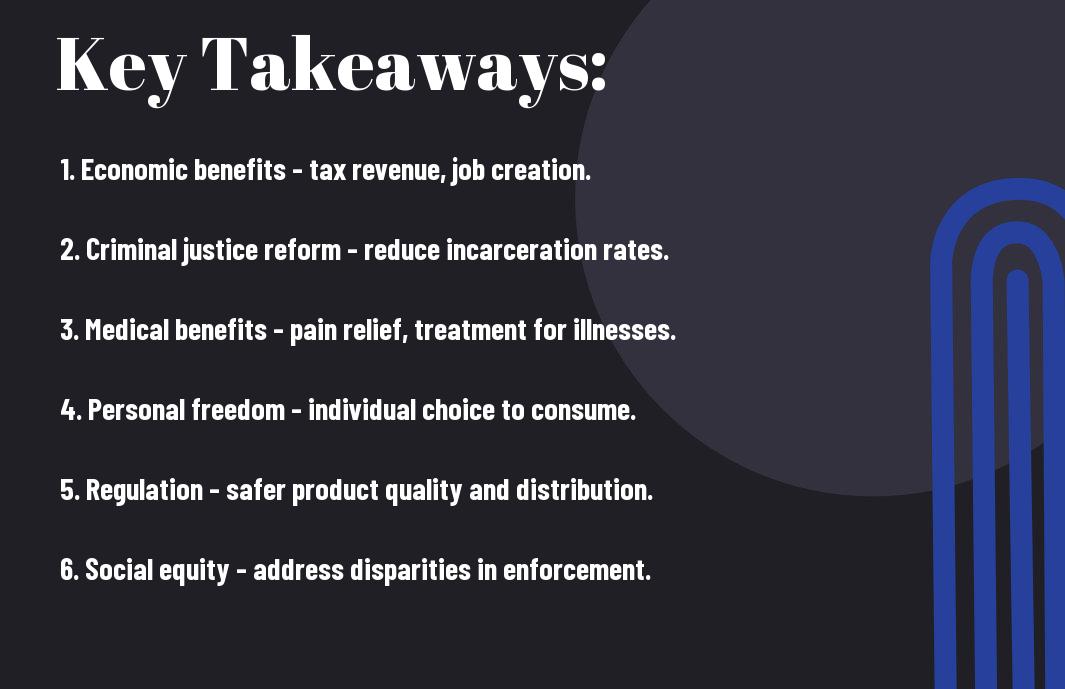
Key Takeaways:
- Medical Benefits: Support for marijuana legalization is often driven by the recognition of its potential for treating various medical conditions, such as chronic pain, epilepsy, and anxiety.
- Economic Opportunities: Many view the legal marijuana industry as a potential source of significant economic growth through job creation, tax revenue, and business opportunities.
- Criminal Justice Reform: Advocates argue that legalizing marijuana can help reduce the burden on the criminal justice system, particularly in dealing with low-level drug offenses.
- Individual Freedom: Some support legalization based on the belief that individuals should have the freedom to make choices about their own bodies, including using marijuana responsibly.
- Public Opinion Shift: There has been a shift in public perception towards marijuana, with polls showing increasing support for legalization as more people become aware of its potential benefits.

Historical Overview of Marijuana Use
Traditional Uses of Marijuana
Overview: Marijuana has been used for various purposes for thousands of years. In ancient civilizations, such as Mesopotamia and China, marijuana was utilized for medicinal and spiritual practices. Native American tribes also used marijuana in rituals and for its medicinal properties.
Legal Attitudes Over Time
The legalization of marijuana has a complex and varied history. Initially, marijuana was legal in the United States and was even included in the U.S. Pharmacopeia until the early 20th century. However, with the rise of anti-drug sentiments and the “War on Drugs” in the 1970s, marijuana was classified as a Schedule I controlled substance, along with heroin and LSD. This led to strict regulations and criminalization of its use.
To provide deeper insights into the evolution of legal attitudes towards marijuana, it is crucial to examine specific milestones such as the Marihuana Tax Act of 1937, the establishment of the National Organization for the Reform of Marijuana Laws (NORML) in 1970, and the legalization efforts in various states starting in the late 1990s. These events have shaped the current landscape of marijuana legalization in the United States.
Medicinal Advantages of Marijuana
Treatments for Chronic Conditions
Conditions such as chronic pain, multiple sclerosis, and epilepsy have shown promising results when treated with marijuana. The compounds in marijuana, particularly THC and CBD, can help alleviate symptoms associated with these conditions and improve the quality of life for patients. Many individuals have reported reduced pain, muscle spasms, and seizures after incorporating marijuana into their treatment regimen.
Palliative Benefits for Terminal Illnesses
Any individual facing a terminal illness can benefit from the palliative effects of marijuana. Patients with conditions like cancer often experience severe pain, nausea, and loss of appetite due to their illness or treatments like chemotherapy. Marijuana can provide relief from these symptoms, allowing patients to find comfort and possibly even improve their appetite and overall well-being in their final days.
The therapeutic effects of marijuana extend beyond just physical symptoms. Marijuana has shown to help patients cope with the emotional and psychological toll of terminal illnesses, offering a sense of calm and relaxation during a challenging time. This holistic approach to treatment is why many advocate for the use of marijuana in palliative care settings.
Economic Benefits of Marijuana Legalization
Tax Revenues and Savings
On the economic front, one of the main reasons for supporting marijuana legalization is the potential for significant tax revenues and savings. By regulating and taxing the marijuana industry, states can generate substantial income that can be used for various public services and initiatives. In addition, legalizing marijuana can result in savings from a reduction in law enforcement and incarceration costs related to enforcing outdated drug policies.
Job Creation and Industry Growth
On the employment side, the legalization of marijuana can lead to job creation and the growth of a new industry. With the establishment of legal dispensaries, cultivation facilities, testing labs, and other related businesses, there is a surge in demand for skilled workers across various sectors. This development not only provides employment opportunities but also contributes to the overall economic growth of the region.
Savings can also be seen in the form of reduced criminal justice expenses as law enforcement resources are redirected towards more pressing issues. Legalization allows for the reallocation of funds that would have been spent on enforcing marijuana laws towards more meaningful endeavors, ultimately leading to a more efficient use of taxpayer dollars.
Societal Impact of Legalization
Once again, the debate around marijuana legalization raises important questions about its societal impact. Advocates argue that legalizing marijuana can bring about positive changes in various aspects of society. For a deeper understanding of the topic, refer to the article “Should Marijuana be Legalized?.”
Reduction in Crime Rates
For many proponents of marijuana legalization, one of the key aspects is the potential reduction in crime rates. By legalizing and regulating the production and sale of marijuana, the illegal market for the drug is expected to diminish. This can lead to a decrease in drug-related crimes, such as illegal trafficking and distribution, ultimately contributing to a safer society.
Racial and Social Justice Implications
The issue of racial and social justice is a critical consideration when discussing marijuana legalization. The criminalization of marijuana has disproportionately affected marginalized communities, leading to a cycle of incarceration and disenfranchisement. The legalization of marijuana presents an opportunity to address these disparities and implement policies that promote equity and fairness in the criminal justice system.
Advocates point out that the enforcement of marijuana laws has often targeted minority populations, despite similar rates of usage across different racial groups. Legalization can help rectify this imbalance by removing the criminal penalties associated with possessing or using the drug, thus reducing the impact of prejudiced law enforcement practices on minority communities.
Regulatory Considerations for Marijuana Use
All around the world, support for Grassroots Support for Legalizing Marijuana Hits Record, as people recognize the potential benefits of marijuana legalization. However, along with the benefits come the need for regulatory considerations to ensure safe and responsible use of the substance.
Establishing Usage and Safety Guidelines
Establishing clear usage and safety guidelines is crucial to ensuring that the legalization of marijuana is implemented effectively. These guidelines should include dosage recommendations, consumption methods, and age restrictions to protect vulnerable populations, such as minors, from potential harm.
The Role of Education and Prevention
An vital aspect of marijuana legalization is the role of education and prevention in promoting responsible use and minimizing negative consequences. Through targeted educational campaigns and preventive measures, individuals can be informed about the risks associated with marijuana use and empowered to make informed decisions about their consumption habits.
Final Words
Considering all points discussed above, it is evident that the main reasons for supporting marijuana legalization revolve around its potential economic benefits, social justice implications, and public health considerations. By legalizing marijuana, governments can regulate its production and distribution, generate revenue through taxes, and allocate resources towards more serious crimes. Furthermore, legalization can help reduce the disproportionate impact of drug laws on marginalized communities and provide access to medical marijuana for patients in need. While there are valid concerns about the potential risks associated with marijuana use, the overall benefits of legalization seem to outweigh the drawbacks, making a strong case for reforming current drug policies.
FAQ
Q: What are the main reasons for supporting marijuana legalization?
A: There are several reasons why supporting marijuana legalization is gaining momentum. One of the primary reasons is the potential economic benefits it can bring through taxation and job creation. Legalizing marijuana also helps to reduce the burden on the criminal justice system by freeing up resources and reducing arrests for non-violent offenses. Furthermore, legalization can improve public health by allowing for regulation and quality control of cannabis products, leading to safer consumption practices.
Q: Will legalizing marijuana lead to an increase in drug abuse?
A: Contrary to common misconceptions, studies have shown that legalizing marijuana does not necessarily lead to an increase in drug abuse. In fact, in states where marijuana has been legalized, there has been a decrease in opioid-related deaths and opioid prescriptions. Legalization allows for better regulation and monitoring of cannabis use, which can help prevent abuse. Additionally, education and public health programs can be implemented to promote responsible consumption and address any potential concerns.
Q: How does marijuana legalization impact social equity and justice?
A: Marijuana legalization plays a crucial role in promoting social equity and justice. The War on Drugs has disproportionately affected communities of color, leading to mass incarceration and perpetuating systemic inequalities. By legalizing marijuana, we can address these disparities by expunging criminal records, reinvesting revenue into these communities, and implementing social equity programs to ensure fair participation in the emerging cannabis industry. Additionally, legalization can help shift law enforcement resources towards more pressing issues, contributing to a more just society.